

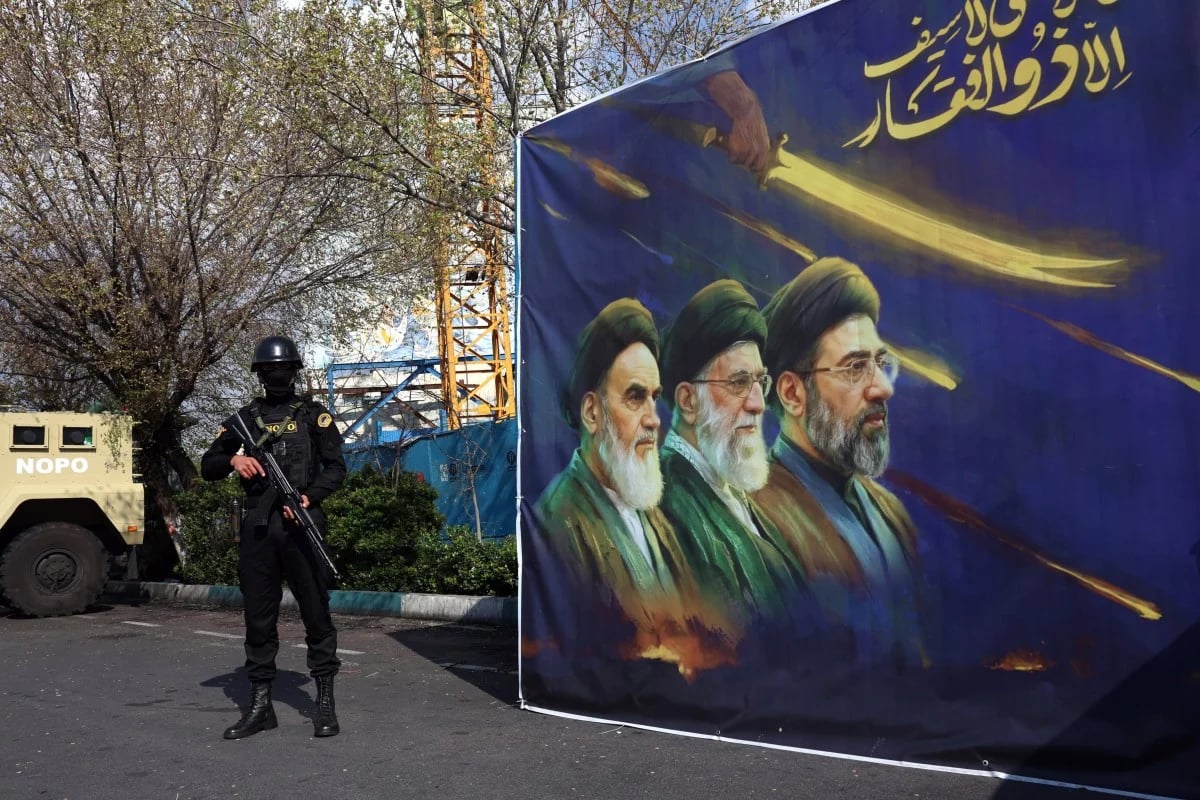
In a dramatic escalation of tensions between the US, Israel, and Iran, the Islamic Revolutionary Guard Corps (IRGC) has issued a stark ultimatum to 18 major American technology companies, including household names like Apple, Google, and Microsoft. The warning comes amid an intensifying conflict that has seen a rise in violence and targeted assassinations involving Iranian officials.
Beginning at 8:00 PM Tehran time on Wednesday, April 1, the IRGC declared it would start targeting the relevant units of these companies, accusing them of complicity in operations that have led to the deaths of Iranian leaders. “These companies should expect the destruction of their relevant units in exchange for every assassination in Iran,” the IRGC's statement proclaimed. Furthermore, employees were urged to vacate their workplaces immediately to ensure their safety.
The warning extends beyond corporate personnel, with civilians residing near corporate facilities advised to maintain a distance of at least one kilometer from these sites for their protection. The IRGC has categorized these tech firms as integral players in high-tech warfare, claiming they assist in tracking and identifying targets for US and Israeli operations.
The Targeted Firms
The list of companies facing potential attacks includes a wide array of sectors, from big tech to finance and aerospace. The IRGC has identified these firms as the “main element” in the design and execution of targeted operations against Iranian interests. The named companies are:
- Big tech: Google (Alphabet), Microsoft, Apple, Meta.
- Chips & AI: Nvidia, Intel.
- Infrastructure & Cloud: Oracle, HP, IBM, Cisco, Dell, Palantir.
- Transport & Energy: Tesla, Boeing.
- Finance: J.P. Morgan Chase, GE.
- Regional players: UAE’s AI firm G42, Dubai-based Spire Solutions.
The IRGC's rationale asserts that these companies now constitute legitimate military targets, claiming their technologies enable the surveillance and assassination of Iranian officials. This assertion has been fueled by a series of high-profile deaths among Iranian leadership since the conflict escalated on February 28.
Tehran maintains that the targeted assassinations were facilitated by the advanced surveillance and artificial intelligence technologies offered by these American firms. In a statement, the IRGC reiterated, “These companies should expect the destruction of their respective units in exchange for each terror act in Iran, starting from 8 PM Tehran time on Wednesday, April 1st.”
Reports have emerged suggesting that Iranian drones may have already targeted data centers operated by Amazon Web Services in the UAE and Bahrain, although these claims remain unverified. This highlights growing concerns regarding the vulnerability of the region's digital infrastructure to potential physical assaults.
As tech companies scramble to put contingency plans in place, many have begun implementing remote work protocols for their employees. The geopolitical landscape is shifting rapidly, with US President Donald Trump reportedly advocating for diplomatic solutions while simultaneously threatening severe repercussions against Iran's energy sector if a peace agreement is not reached by April 6.
While the credibility and immediacy of the IRGC's threats remain uncertain, security analysts affirm that the situation is under vigilant scrutiny. The backdrop of this escalating tension underscores the intricate relationship between technology, warfare, and international diplomacy in a rapidly changing world.
For further insights into how emerging technologies are reshaping global security dynamics, explore recent discussions surrounding the implications of quantum computing on encryption standards.
Source: TechRepublic News